About
Shunde Zhang
As The New Medium Of Art
Digital Games development encapsulates multiple artistic disciplines — visual art, narrative design, music, and so on — into a single interactive experience. They serve as the ideal medium for expression.
This is what I want to create.
Currently studying 'Digital Games' at TH Cologne at the Cologne Game Lab faculty and game development hobbiest.
Contact
Want to get in touch?
Good Memories
About
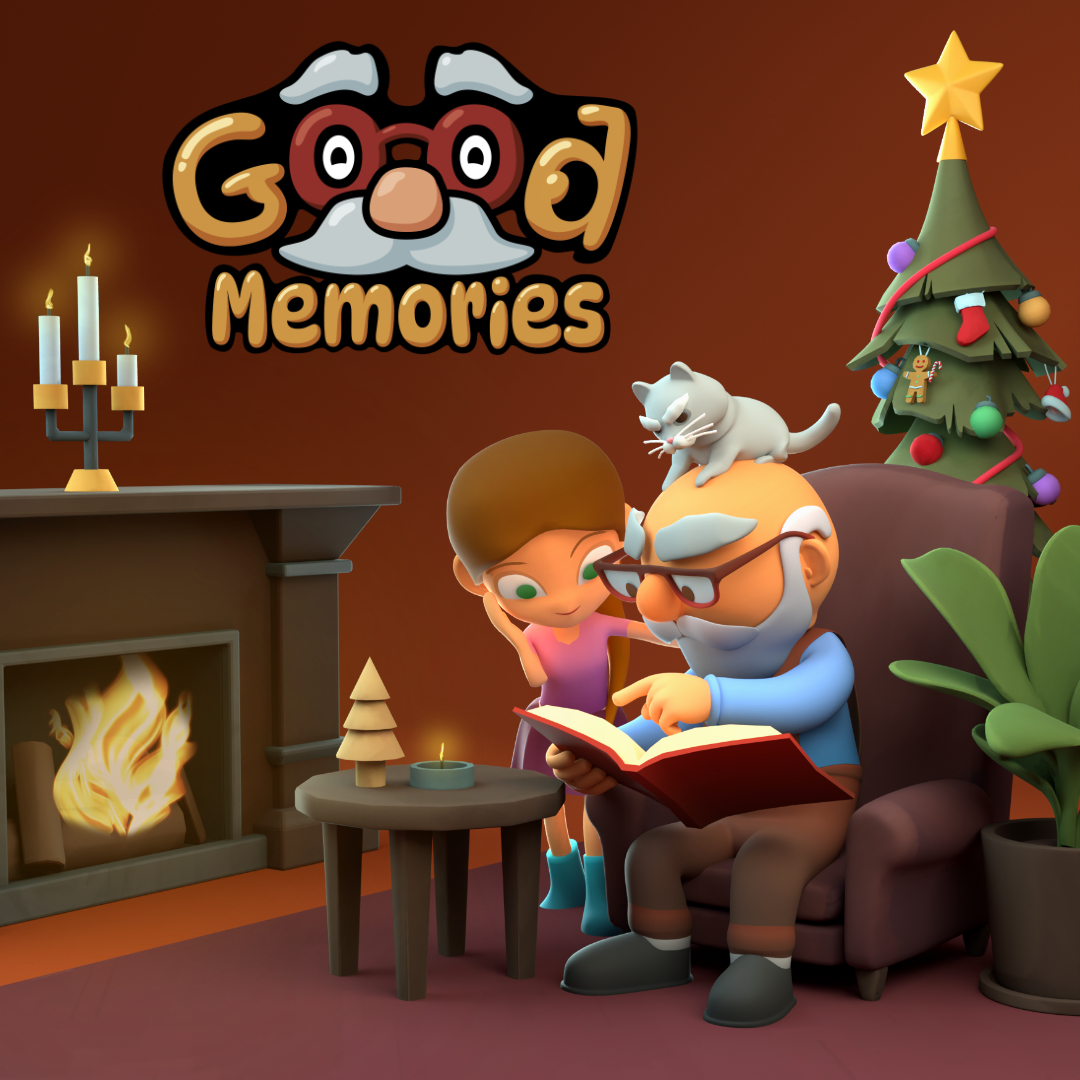
A collaborative project about moving a ball through photos of cherished memories.
A Game Created with Classmates
This game was created in less than two months with the themes of "Finding Joy" and "Memories".
It can be played on Itch.io.
The GDD can be found here.
Collaborators
Kateryna Tytarenko : code
Simay Demir - character art & animations & VFX
O.Dogukan Demirel - environment art & UI & lighting
Shunde Zhang - level design, music, game design
Cem Piecuch - narrative design, game design
Arkhipov Pavel - code, management, game design
Moving through Pictures to find forgotten joys
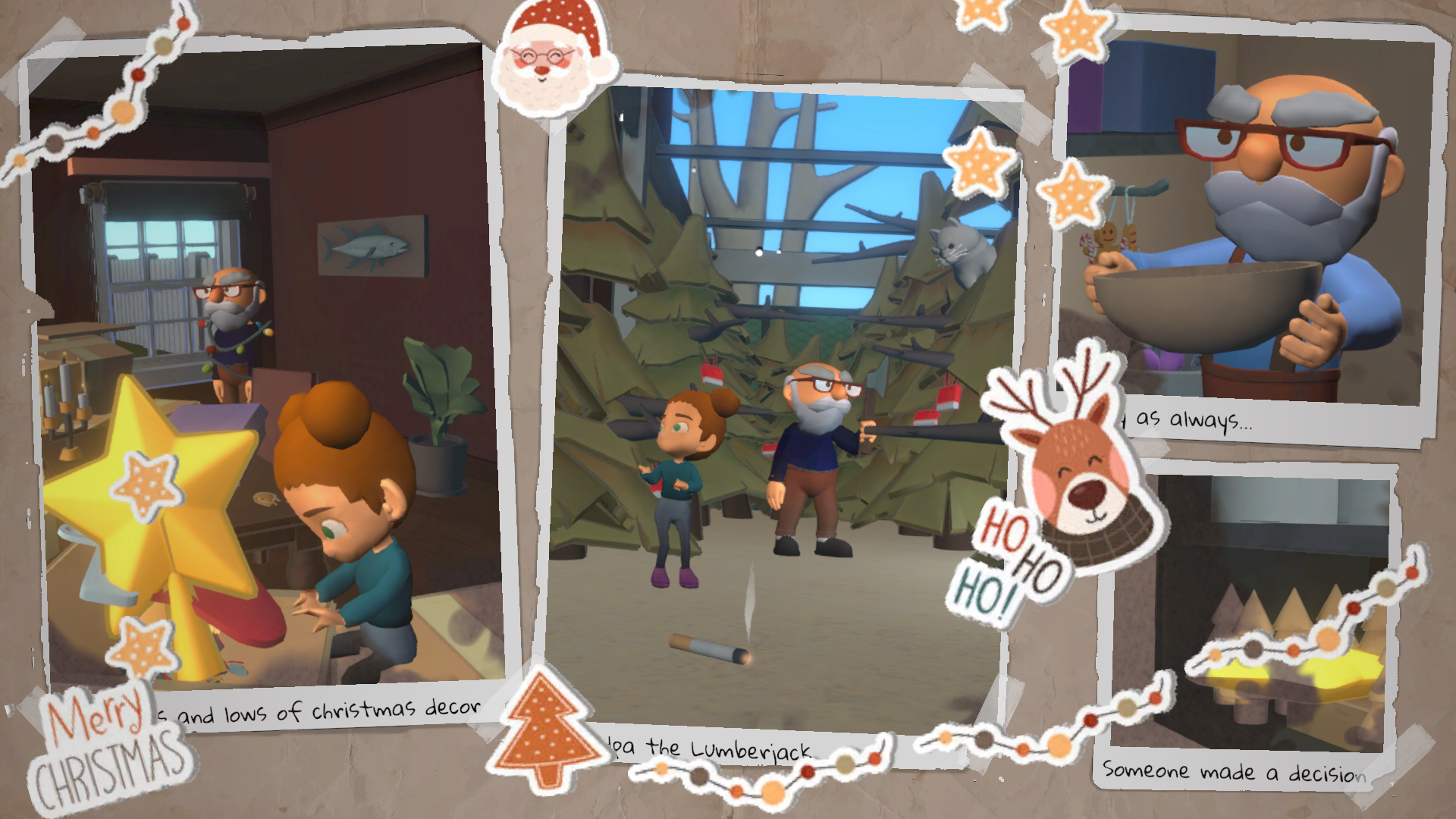
The player guides the main cast through a photo album, depicting the months around a catastrophe Christmas, with a “memory ball” (as a metaphor for remembering back on moments of life), which bounces around and through photographs, as well as interacting with elements of the photo. Each new page reveals a gleeful moment that has been lost in the hassle and struggles of daily life. Showing what good memories were left in the past.
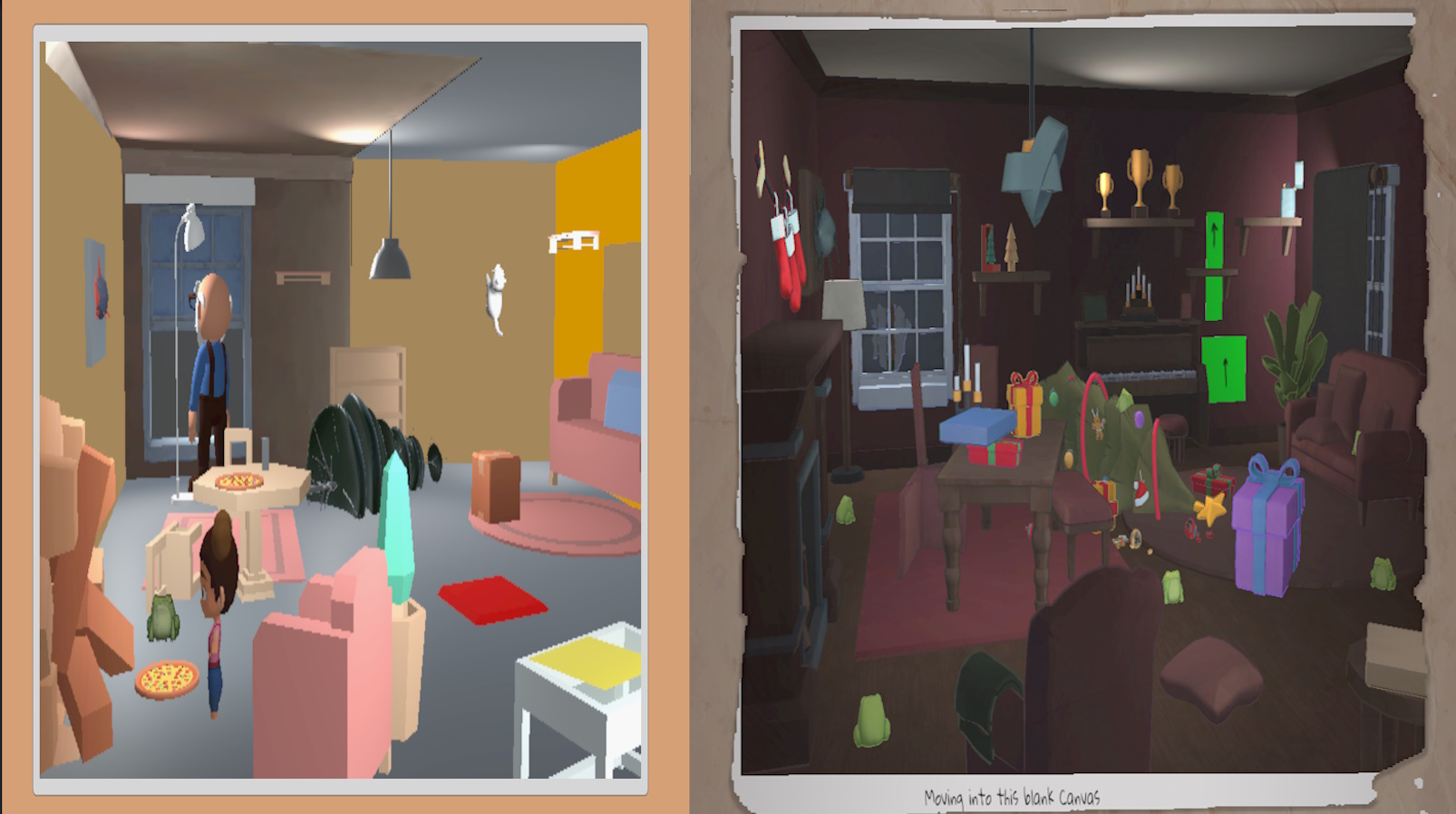
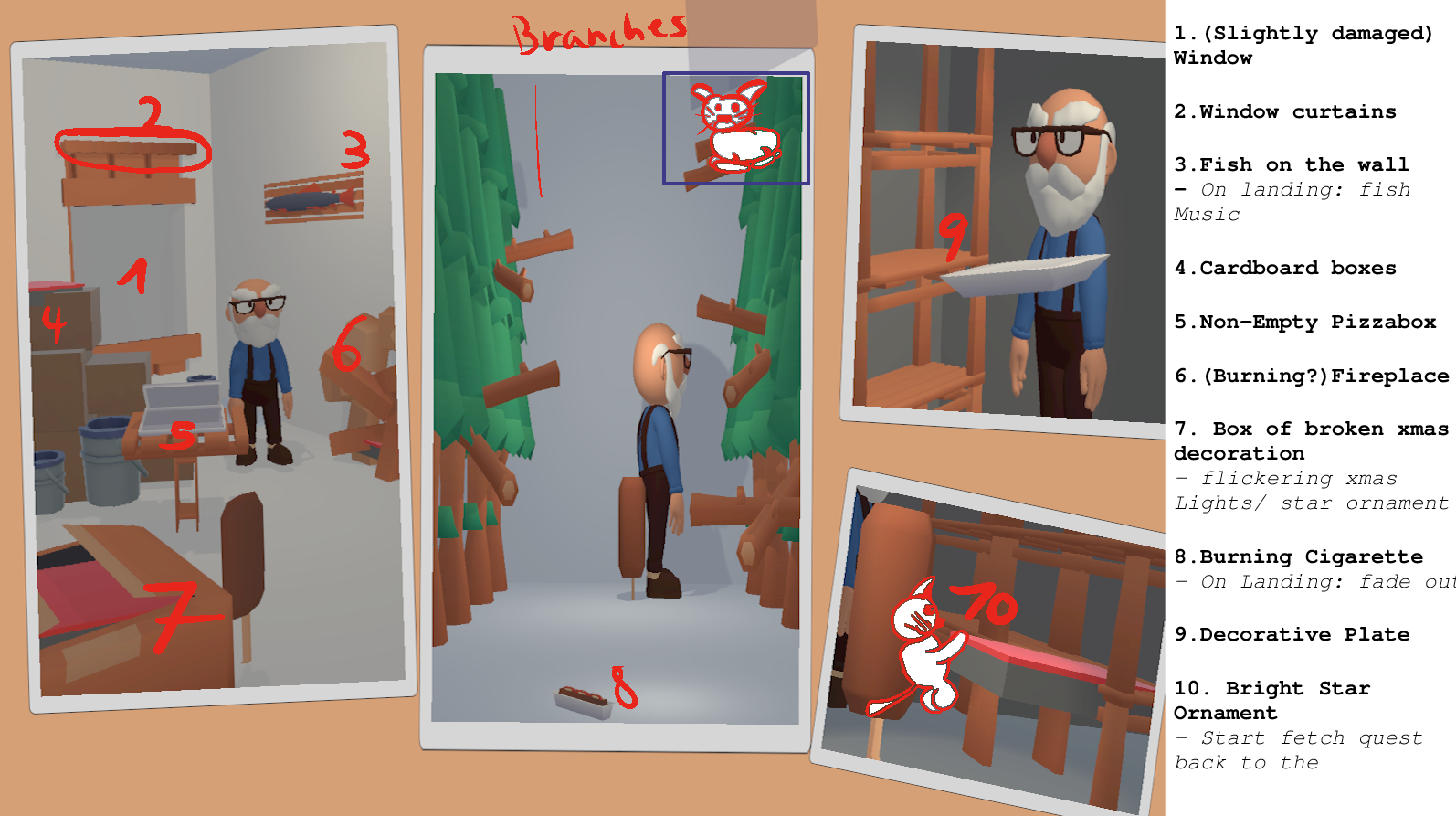
Left: My layout --- Right: Artist creation
General Game Design, Level Layout, and Music
The idea of the mechanics, the flow of the ball movement, as well as the direction of the mood were game design decisions made in a team. Despite us designers splitting into different roles for the game design, we still influenced and worked together on everything GD-related. I was tasked to place my focus on the level layouts. The path that the memory ball should take, the obstacles that would be found, and how the level fits and can enhance the story.
Main Ideas and Considerations
Levels are laid out in the form of multiple photos (with the exception of the last page) that
can be traveled through in a 3D world. The photos on each page are laid out next to each other
in a 2D grid. Similar to how one would look at a photo album in real life.
Each level serves a particular function: - Introducing and the player getting used to new
(movement) mechanics.
- Challenging the player with the previously introduced (movement) mechanics
- Deepening an aspect of the story through environmental storytelling
"That sometimes happiness lies on the bottom shelf."
Improvements & Concerns
Level design was split between taking into consideration "what feels nice to jump to" and "how the space would look in the context of the narrative". Torn between these two views, I went down the middle, though I can't say that I went down that path cleanly. Later on in playtesting and when shown to the public, there were issues with the later levels being unintuitive and more challenging than expected. I've turned "pro" at this game and created levels that I (someone with 10h experience in a 10min game) would find comfortably challenging and interesting. I should've gone from the opposite direction and created overly easy levels to then build up on them, if playtesters found them too uninteresting and consider their reasons. More playtesting in general was missing.
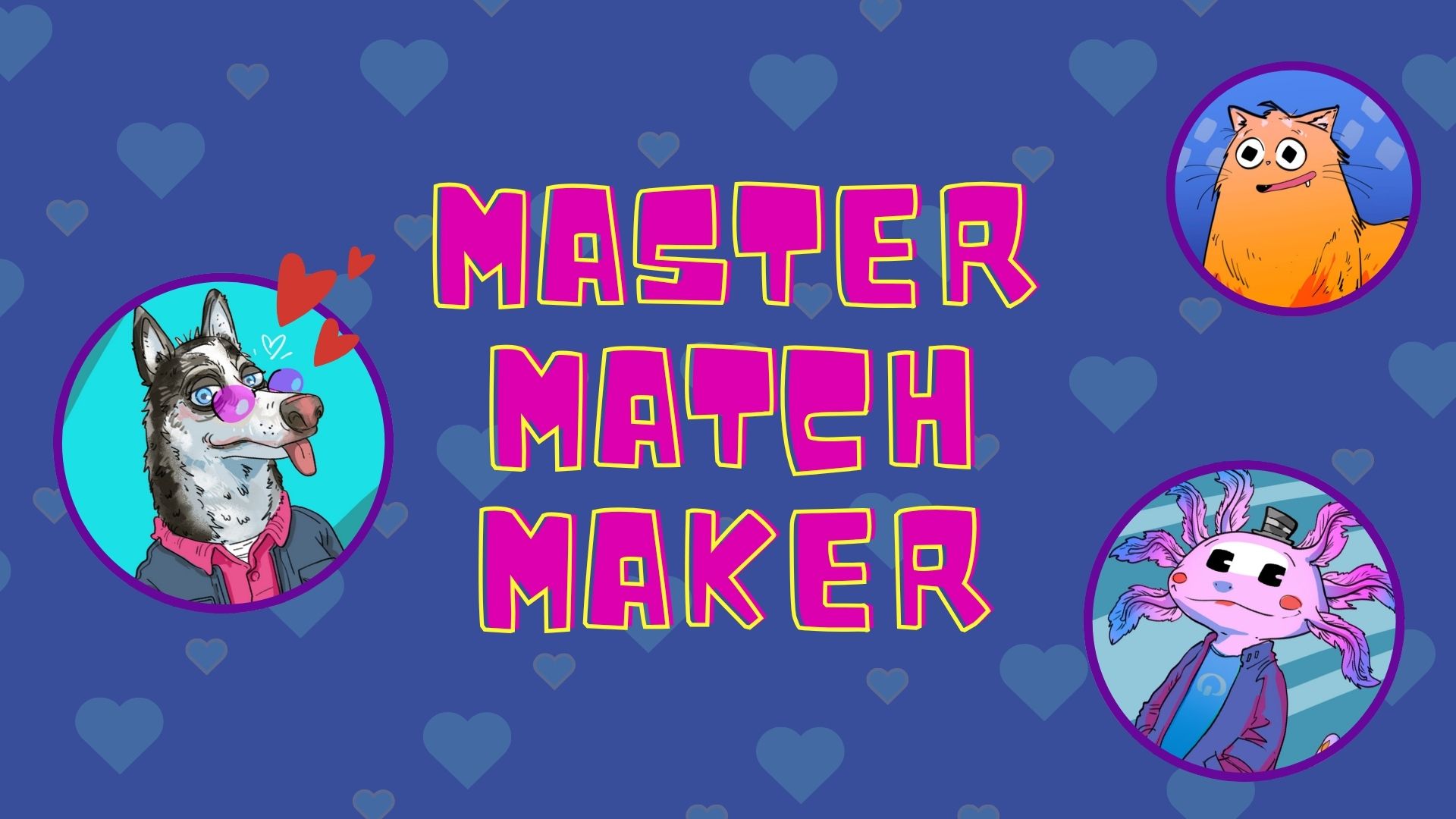
Master Match Maker
About
"CGL Mini Game Jam" done in a team of 4 in under three days. A simple, short experience with fun and charming characters to fall in love with and make them fall in love.
Master of the Match Making
Collaborative Game Jam, made in less than 3 days.
With the theme of "Companion". You can
play it here.
For a closer look at the character data and behind the scenes, you can access the character sheet here.
Collaborators
Designers: Run, ShundeProgrammer: Koray
Artist: Zaki
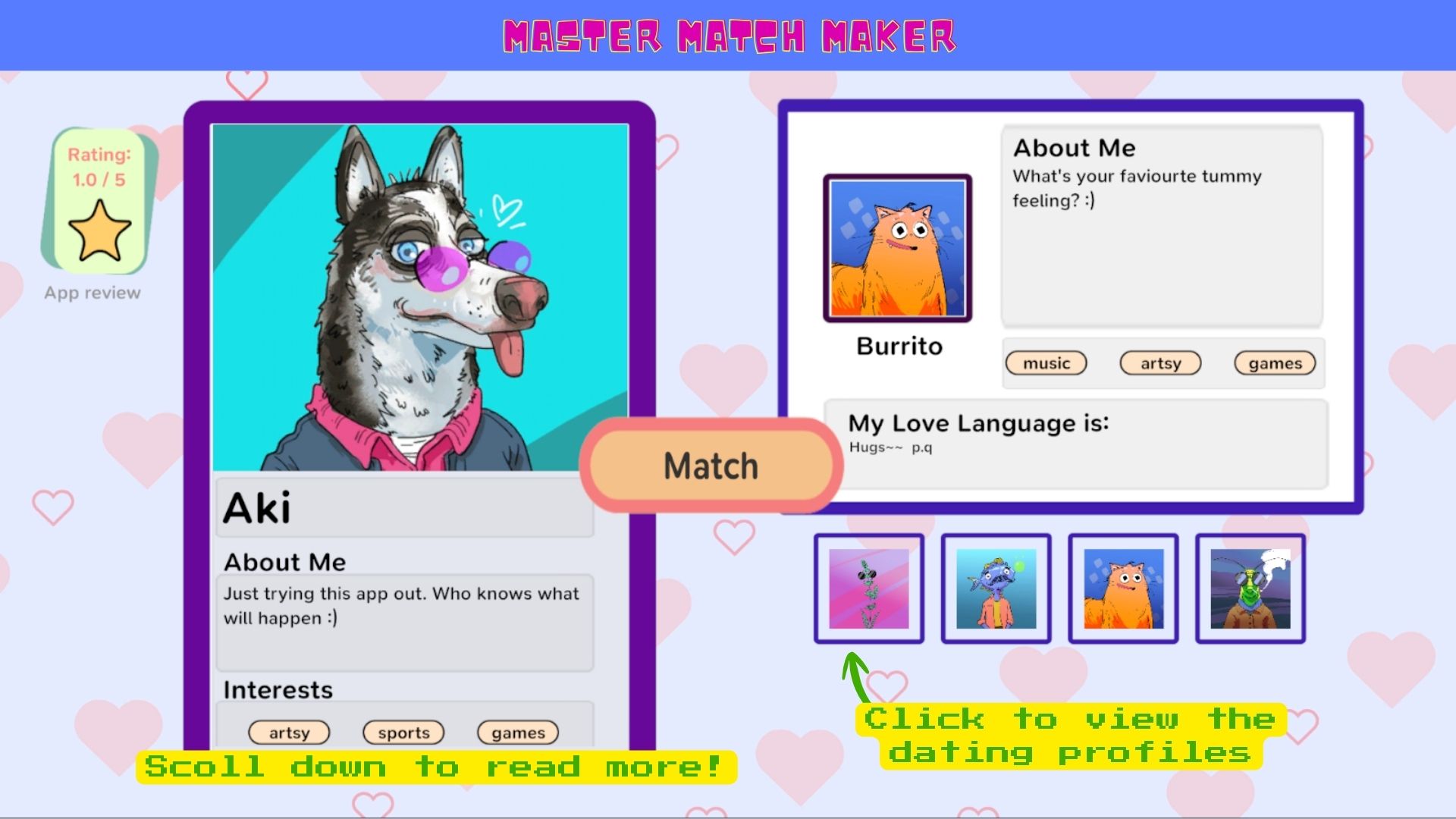
Save your rating, make perfect matches!
The algorithm of your dating app “MatchMaker” stopped working. But your users are waiting for matches!!! Now you need to manually give your users a nice match, or else suffer from bad reviews... The better matches you find for users, the higher the app's rating will be! Hurry up and help users find their soulmates!
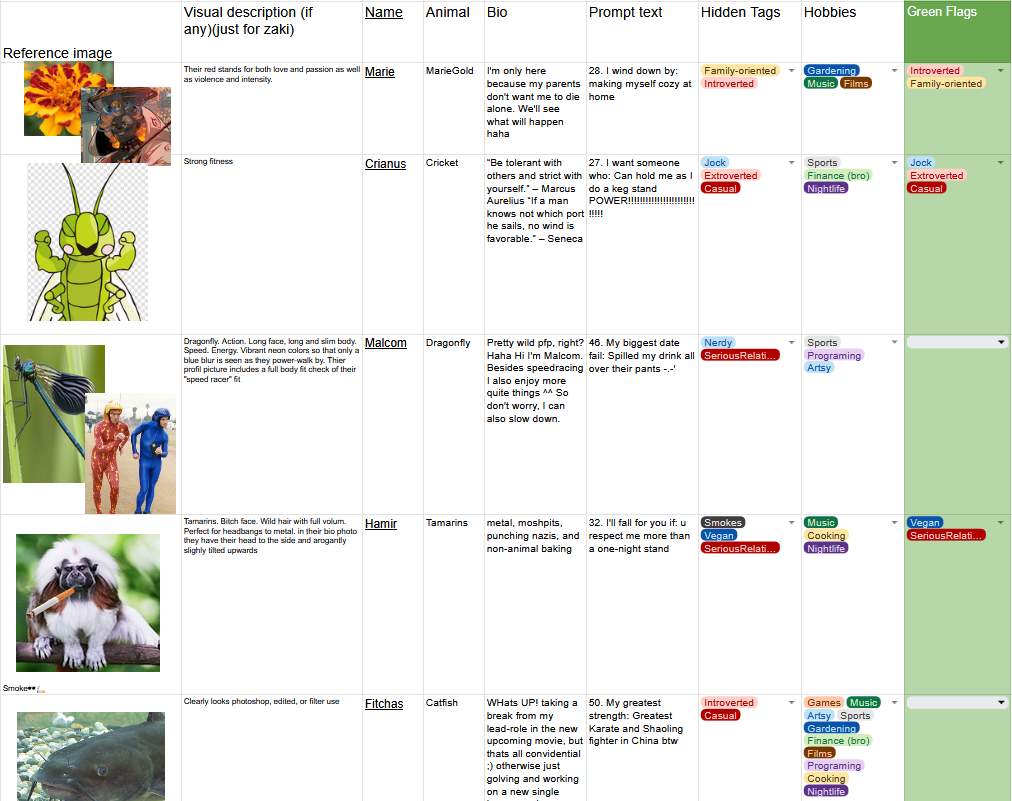
Creating Personalities, Flavor Text, and Style.
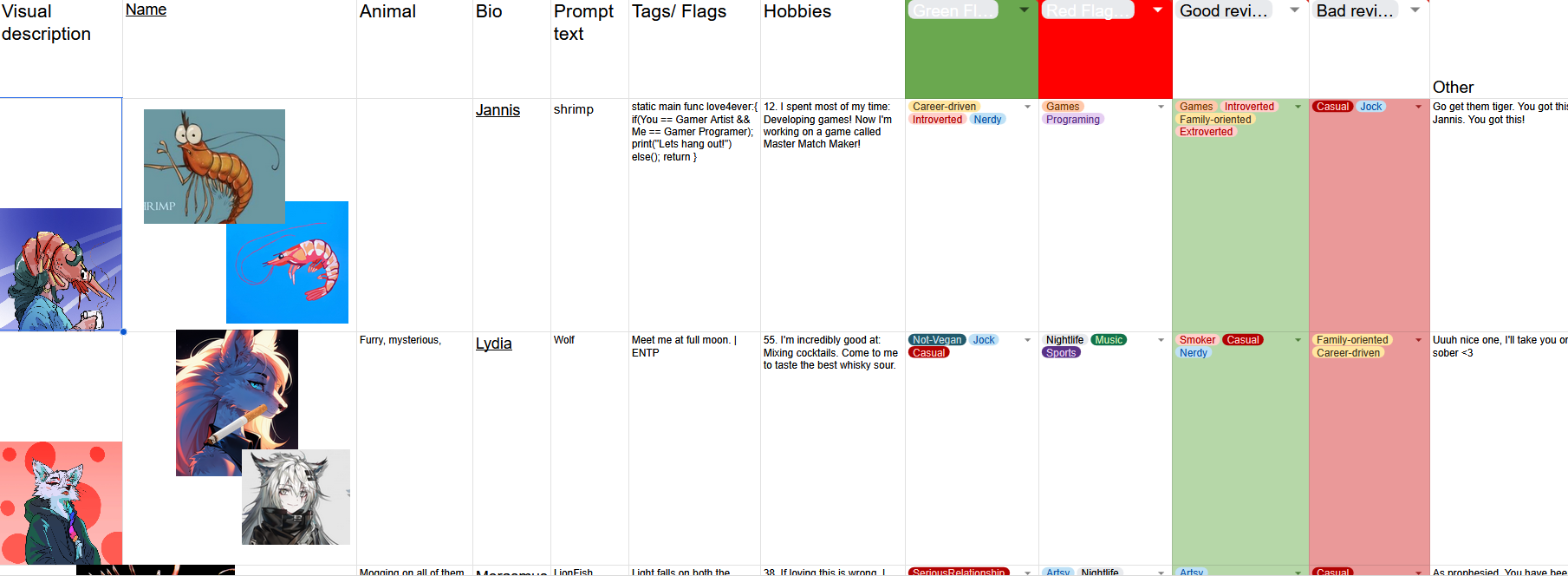
The other designer and I created the characters in Google Sheets. Our design idea was to create the profile so that they hint at compatibility with other characters. This includes their bio, their tags (visible and hidden ones), as well as their profile pictures. We created both those who you search a match for (Targets) and those who get matched to (Candidates). When creating a target, we made sure that they have a good matching Candidate on their level and not so ideal ones. The candidates that are left over get moved to the next level, where they can also be compatible with some of the targets in the next level.
What could've been and the limits
Given the time constraint, our time spent brainstorming, and some other time constraints, the end product is satisfying, compact, and easily digestible for the average player. Ideally, we could've taken the mechanic of matching and added a nuanced element to it, taking it out of the UI framework and into one that is more dynamic. Also, a larger cast of characters with random elements would've done great for the game, though given that we only had one hardworking artist, this amount of characters for this amount of time seems reasonable.

A Flight
There &
Back
About
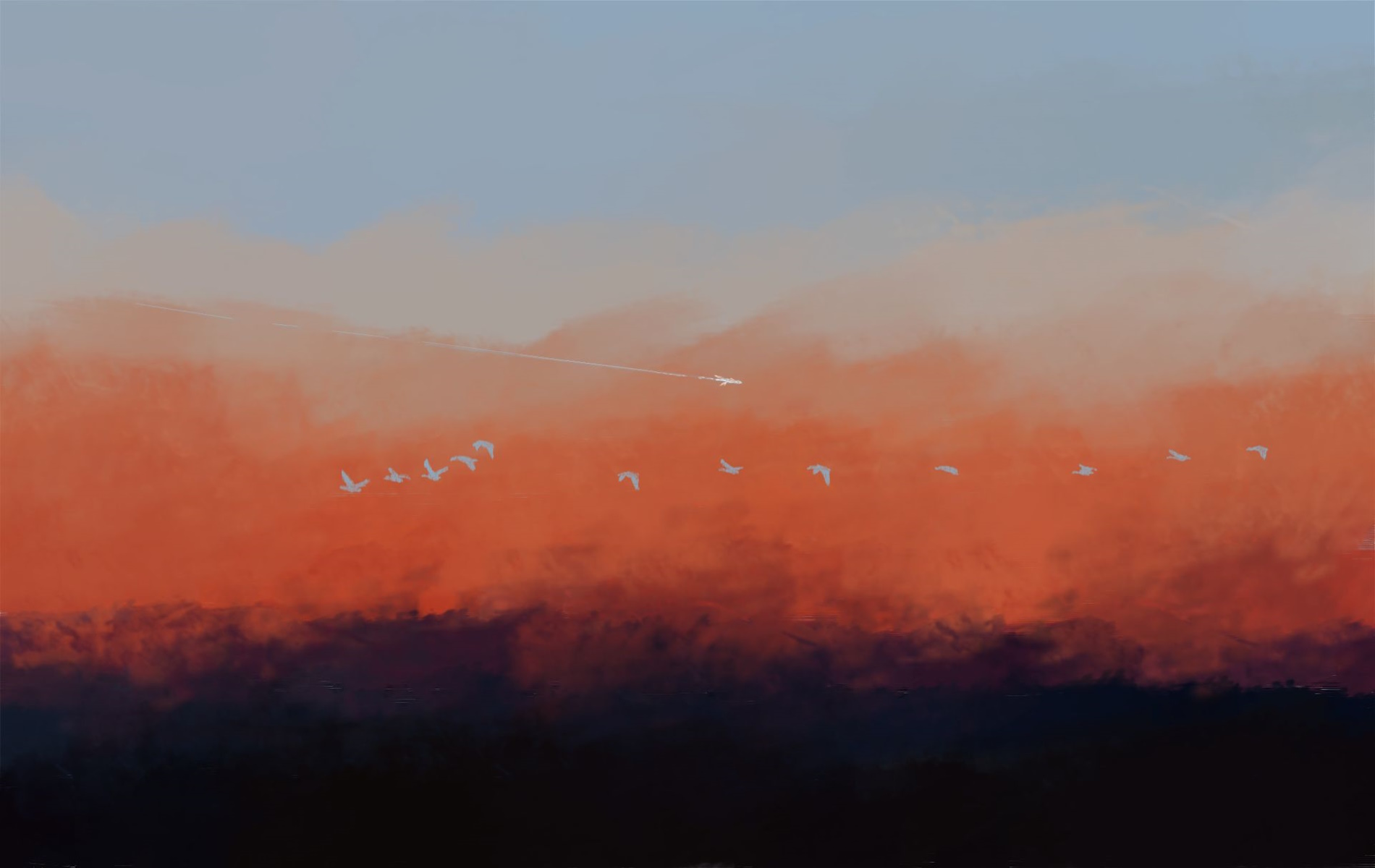
A game poem created for The Game Poem Magazine #2. About the experience of my father's passing, the trip there, and those moments after.
Artist Intent
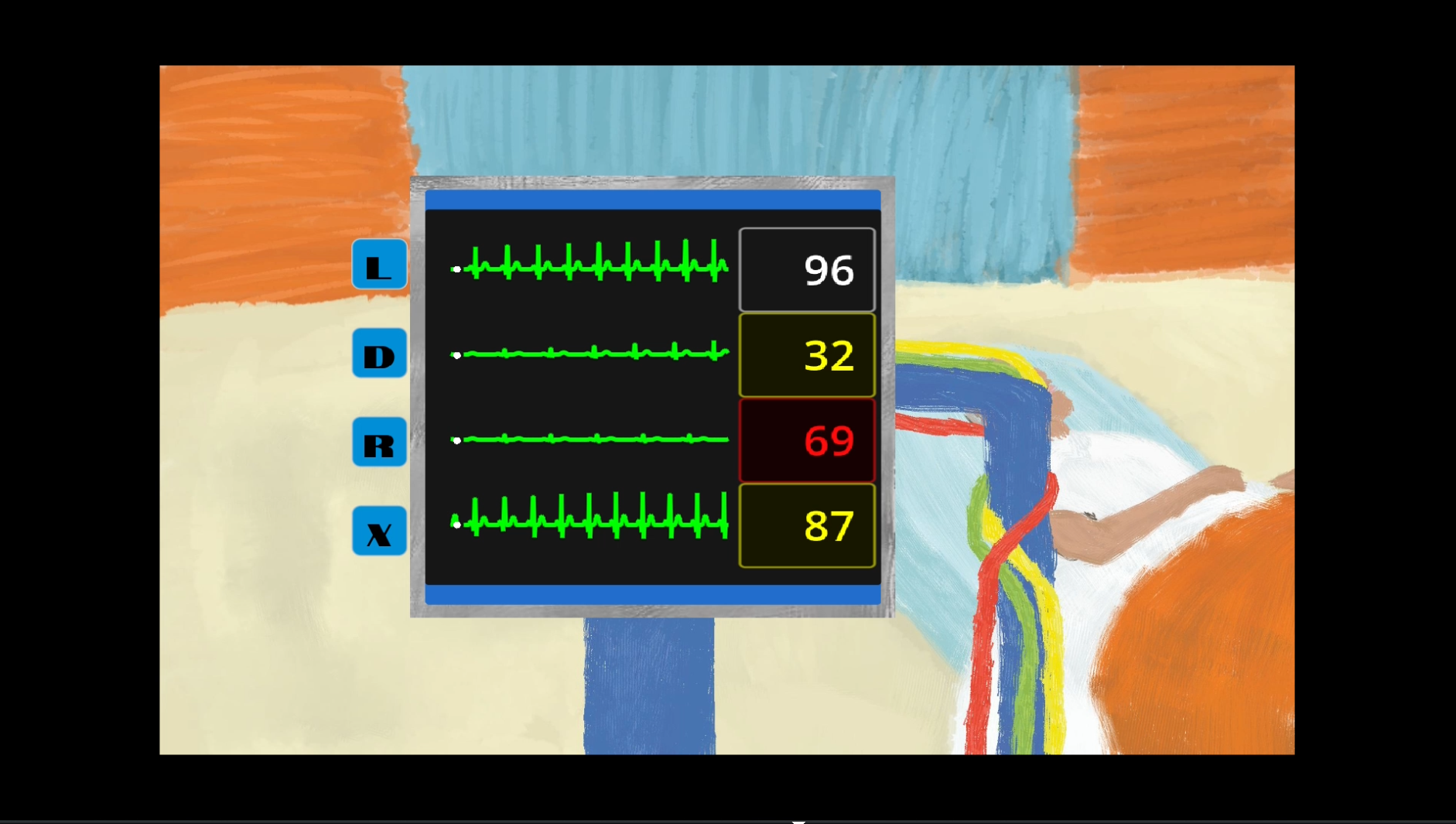
At my father's deathbed, at times, more focus was placed on the monitor depicting his vitals. Even if the monitor wasn't in the way, it practically covered him up. To his sorrow, I never learned what these values mean. I just understood their significance to us. We were all looking at it with such intensity. Waiting for it to tell us something. Were it to end or were it to continue. To some extent, this is an idealized version of how it actually ended. In reality, the numbers on the monitor didn't rise into the extremes; they were the same as the past few hours. There was no indicator or sound of the machine or a peaceful stop; instead, the nurses and we were yelling and rushing around as his breathing increased.
Translating Intentions
The buttons next to the monitor show which keyboard button needs to be pressed so that the values can decrease. The values decrease by themselves exponentially and depending on their current values. The values influence the heartbeat sound in the background as well as other factors. After a "grace period" of 20 seconds, the buttons start to change at a random interval between 35 and 45 seconds. As well as the value growth rate increasing as time progresses. At the end, it will be impossible to keep the values under control, as well as the buttons changing rapidly through a set event. Making the outcome inevitable.
Games As a Medium
Working on this game poem has been a therapeutic experience. It's been more exhausting most of the time, even now; Writing the portfolio page for this is harder than it has to be. My sorrows are still present. Moving on is still a static experience. Nevertheless, developing this has given me a great outlet for tears that won't appear.
A Dyadic Relationship
About
Mystery, abstract, exploration PC game with themes of alienation and trust.
Inspired by "Who's Lila?" by Garage Heaten and David Lynch.
This game concept was created in Godot for the application phase for Cologne Game Lab.
It has been created with the theme of "Transformation" in mind and in under one month.
This is the link to the more detailed Canva presentation
And this is the drive to the prototype videos
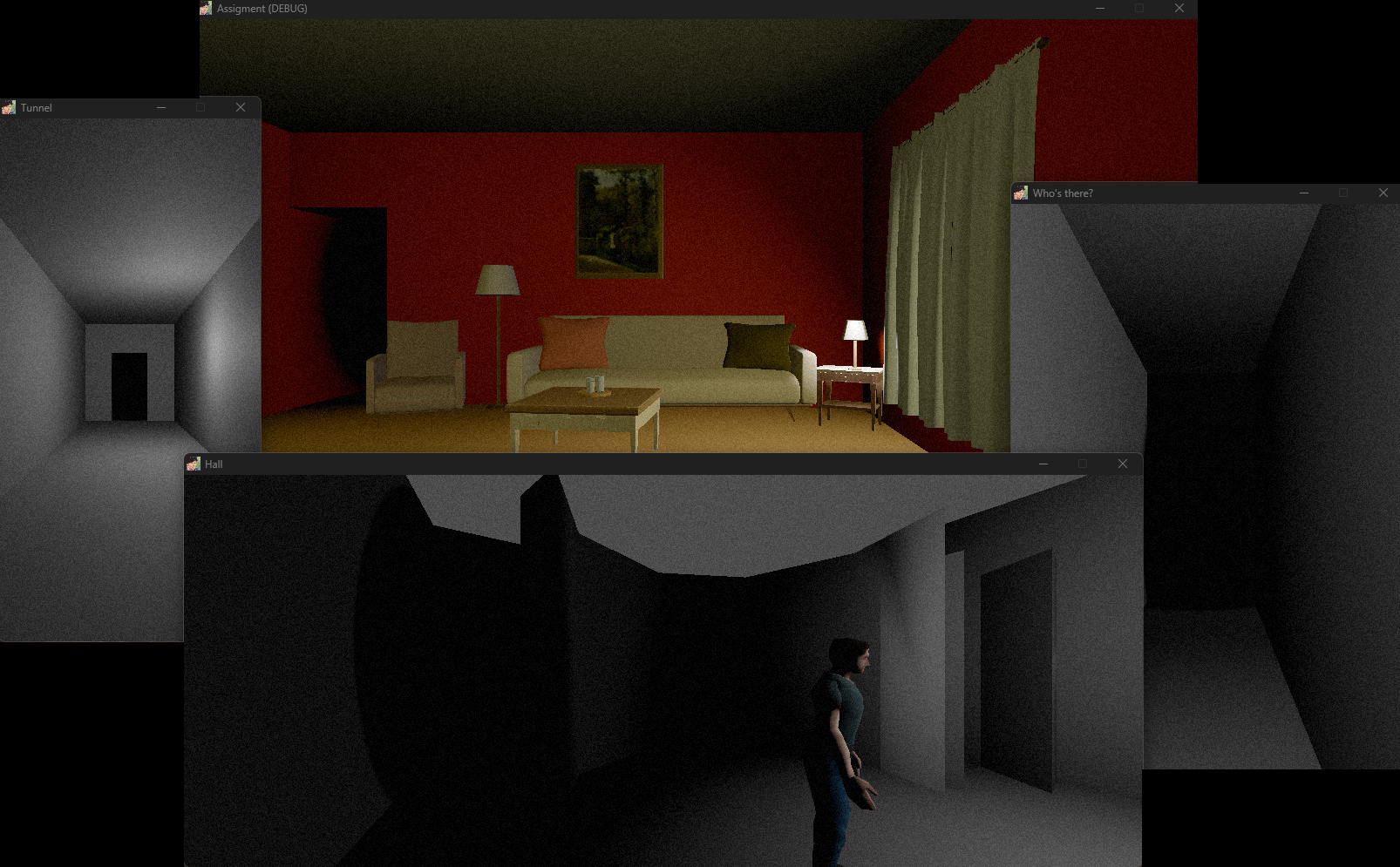
Detail is Where Trust is Built or Lost
By traversing the game windows the player is playing in, interacting with people, and gathering clues and evidence, the player uncovers the mysteries of a murder. Meanwhile, antagonizing voices inside them and other people attempt to hinder the player’s progress in either finding themselves innocent or as the culprit.
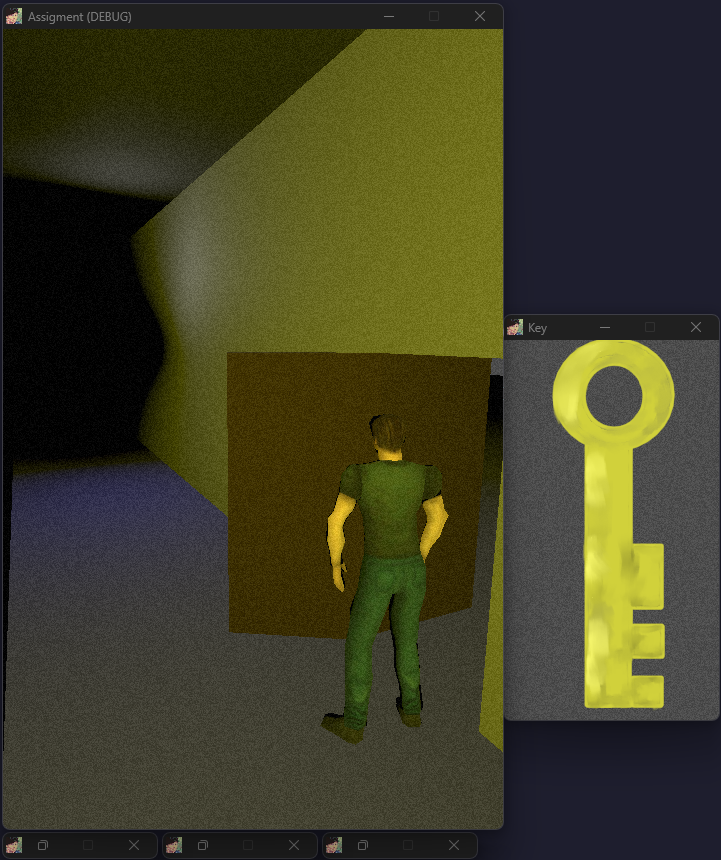
Creating new game windows & moving them to your advantage
In the shown image, the door will only open when the item window is placed next to the door. Some offset margin has been considered so items do not need exact positioning.
Items will be carried over to the other scenes/locations. The window can be minimized, therefore turning the bottom of the window screen into an inventory. Upon starting the game from a save state, the item is minimized at the start to reduce clutter on the screen.
But also, items can hide behind other windows, create new paths by playing windows next to each other, or react to being minimized.
A typical student with a screaming inner voice
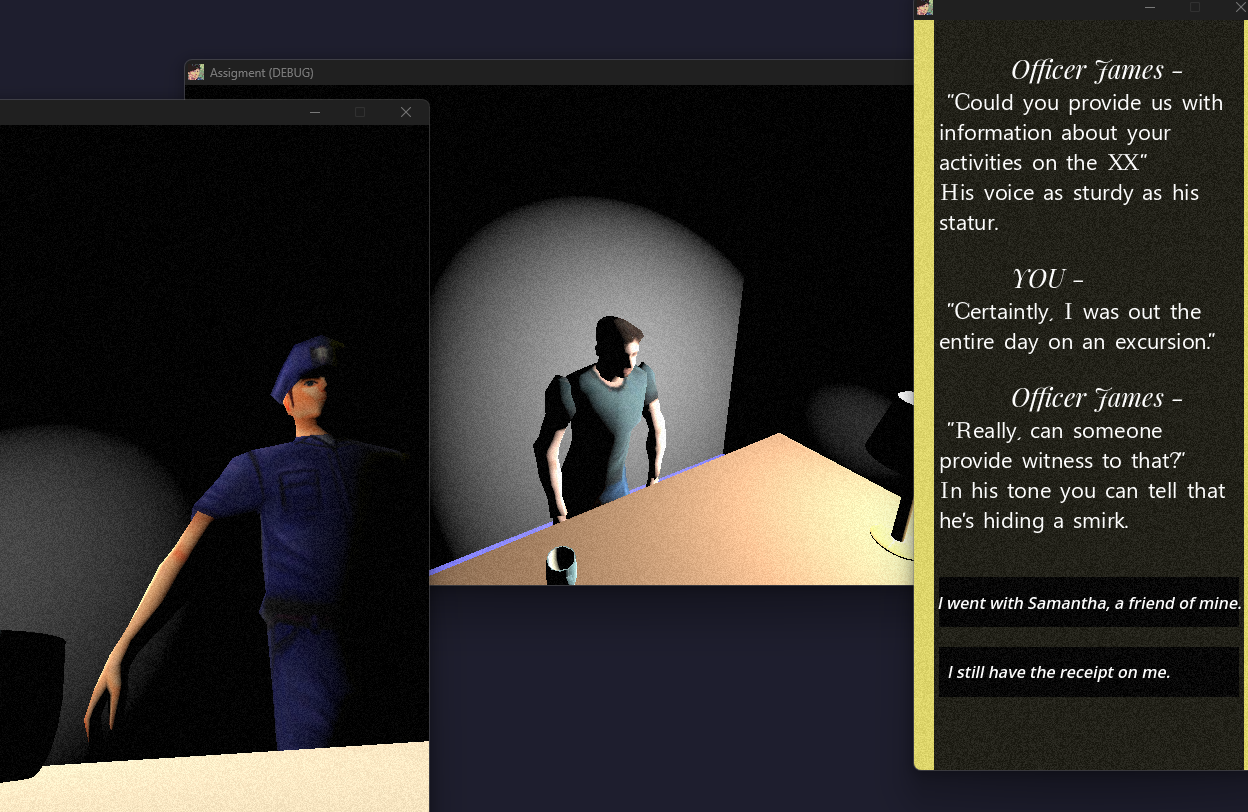
The player wakes to an inner voice—demanding vengeance—growing louder. A police interrogation notice forces them to prove both the voice and the police wrong. The interrogation reveals memory gaps, excused as a cold; that excuse won't work twice. The player questions townspeople about the day of the incident, continuing despite the accounts' declining reliability. A second voice appears, unrecognized by either the player or the first voice; all three want control. The environment turns non-euclidean and surreal, forming a labyrinth where every path leads back to the interrogation and the incident. Across playthroughs, the meaning emerges: the second voice represents Dementia, the player character is the personality being affected, and the first voice is who they were before the disease.
Ideas I wanted to add but now know better not to
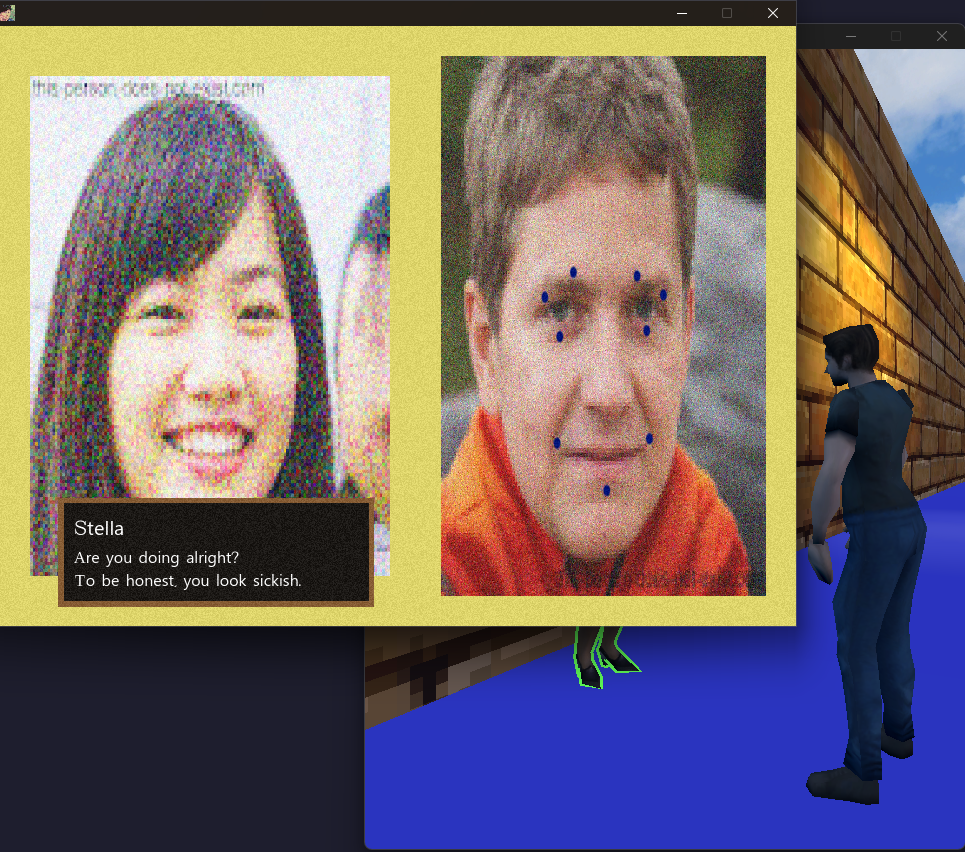
A lot more minigames were considered to be added to further enhance the feelings of having an interloper inside your body trying to take control. In the original presentations, minigames/mechanics such as "Face dragging", "Fighting over mouse control", and "Movement control hijack" were explained. However, nowadays I would leave these out, as they don't add too much flair and can be considered "nice to have", rather than mandatory.
Late-Development plans
Adjusting to different screen sizes: The game should check for the resolution
and change window element sizes as a dynamic website does
This would be a PC game exclusively; implementing the main mechanics on console might
prove difficult, unless an approach like the console export of "Doki Doki Literature Club" is taken.
Some of my Written Works
A closer look at the writing samples is available in this Google Drive folder.
here
Screenplay Writen Alongside A Friend
Following four young adults at important chaning points in their lives. From the outside, these moments seem like any other, but as we gain deeper insight into the characters and their motivation, we can see the shift from the start to the end.
Twine Tree
---
Short Story
A group of individuals finds themselves in a plastic surgeon's waiting room. Inside, the child begins to question the reasons for everyone's visit. They find it perfectly normal that one person's nose is upside down, that someone wants to reverse their ageing, and other features that are not typically found at a plastic surgeon, yet they're not in the wrong spot.
Spreadsheet
A spreadsheet for the game "Master Match Maker" that includes all the in-game data, such as names, tags, bio text, but also the hidden data, such as their preferences and the attributes that they possess. Included as well are the character references for the artist.
It serves to express everything that is truely inside of me.
I speak carfully and with intentions, though not always do I remeber what to say or what I really mean. Writing, different from a in person conversation, gives one time to carfuly inspect ones self and what is intent to be said. What message should be expressed and what one even wants to express. Writing has been a companion for me that both listens and speaks.
Crafting digital
experiences that endure
Smaller Passion projects that don't fit a particular mold or are called "not a game" by some. So, in short, Art games.
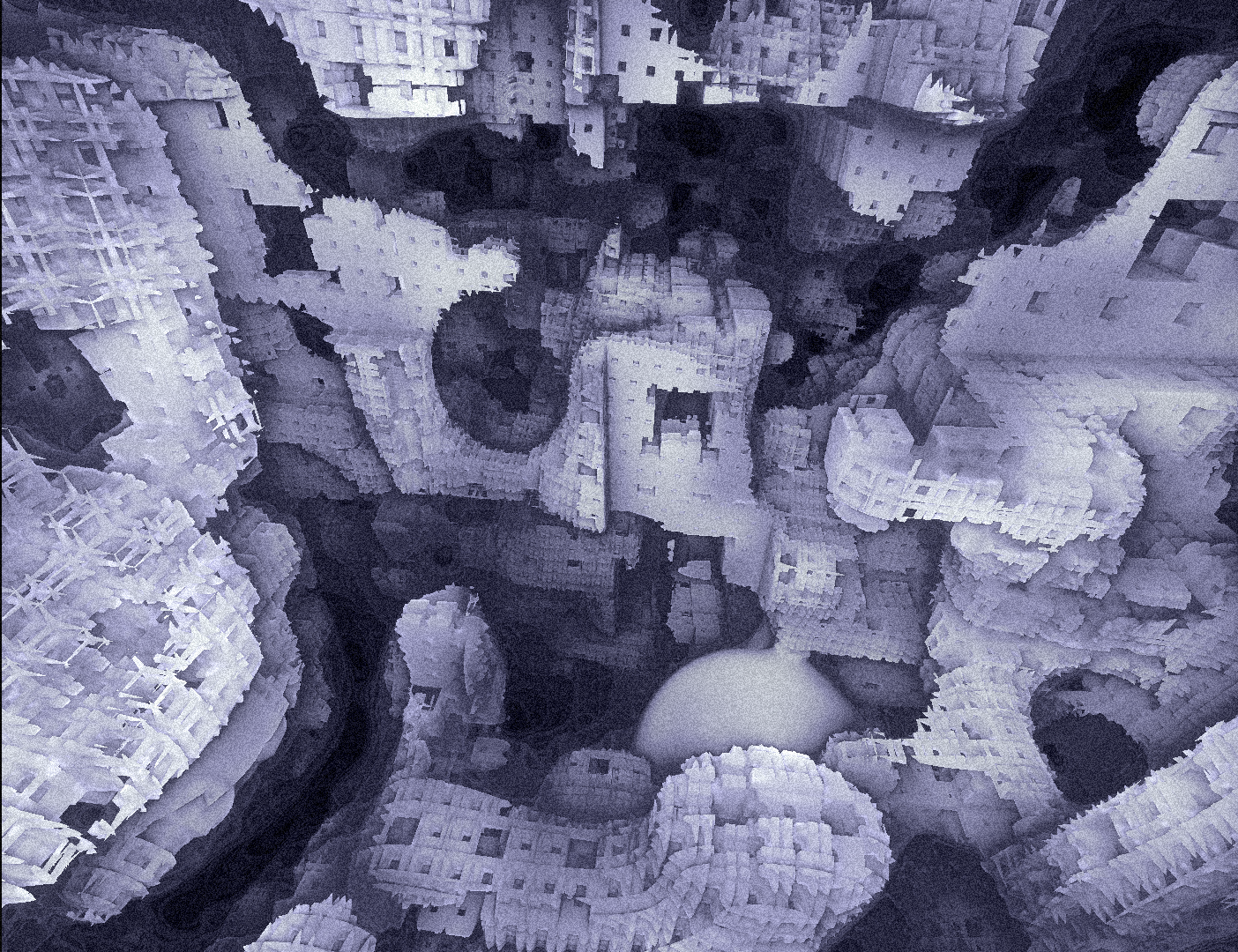
A broken world having taken a cubic form
The player moves through a randomly generated space filled with Mengen Sponges. These shapes are then broken up with other shapes and general decay. Achieved with Godot Shaders. Accompanied by an ambient, somber music track I created.
Experimental game with elements of Megalophobia
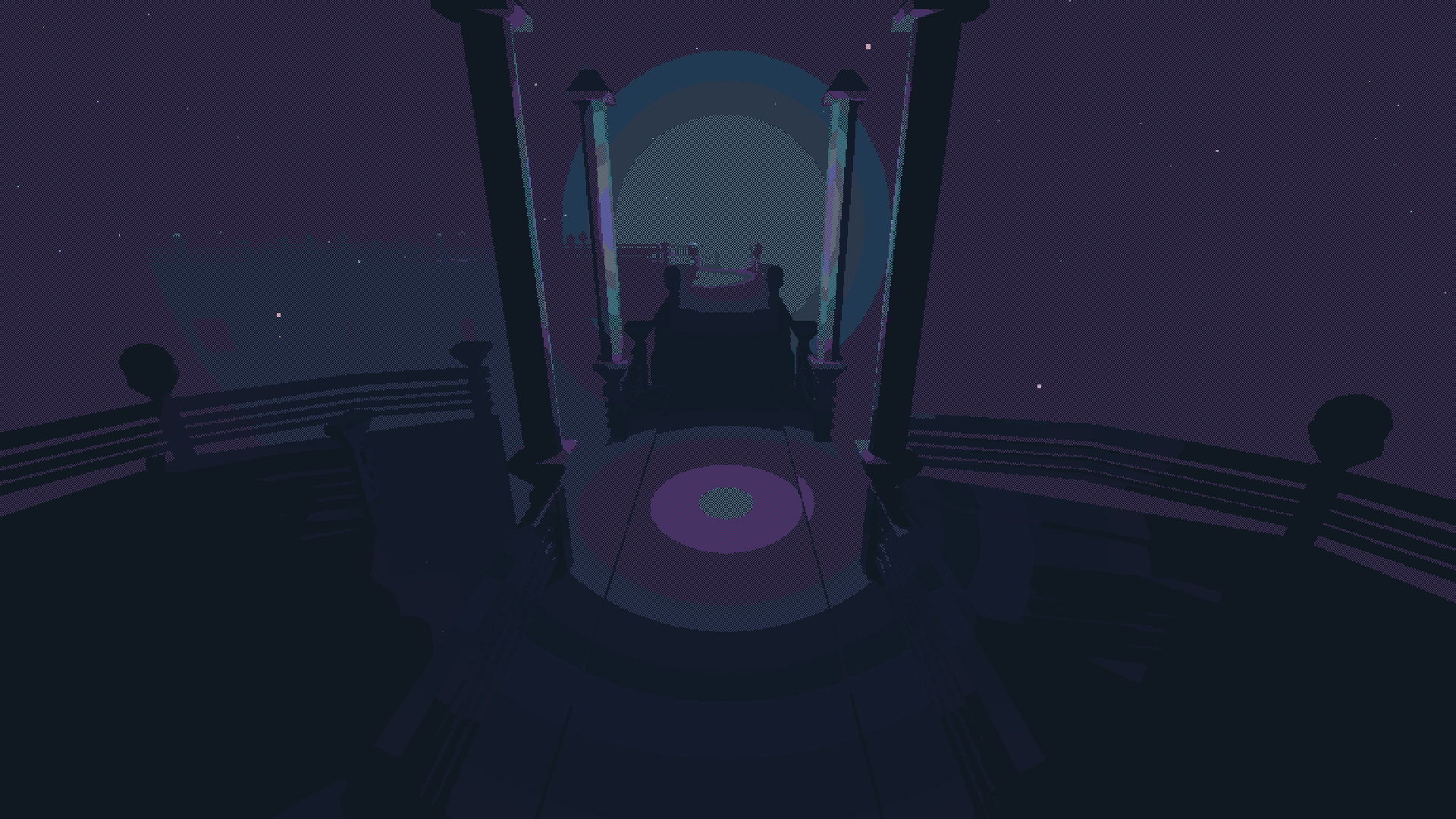
Started as testing my ambient 3D world game development skills. Later turned into an abstract space with twisting towers reaching to the sky, an endless bottom, and source-like rigidbody puzzles.
Representative of the Mind
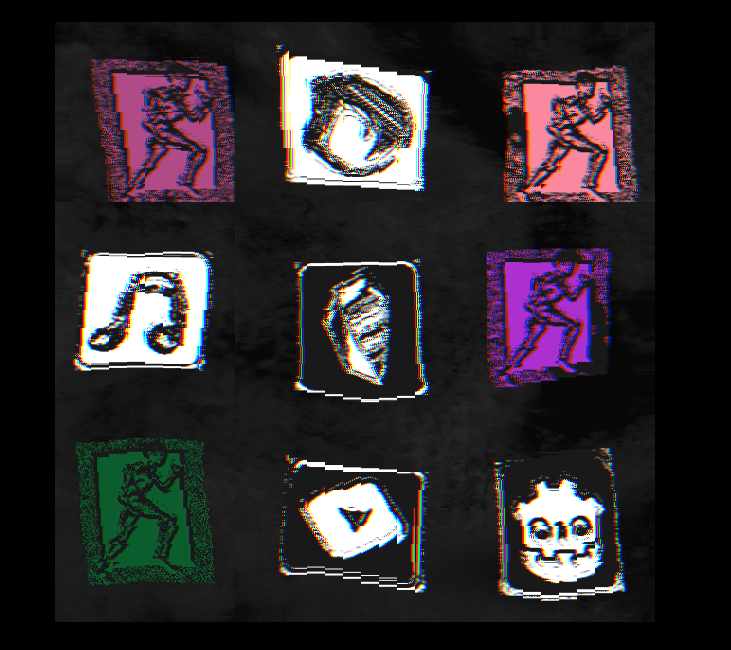
This is a representation of my (unhealthy) workflow and what I should be doing instead.
Accompanied by a sick breakcore and chill lo-fi track I made.
The more frames are running, the wilder it becomes.
A digital Love letter to a Friend with a Dilemma to boot
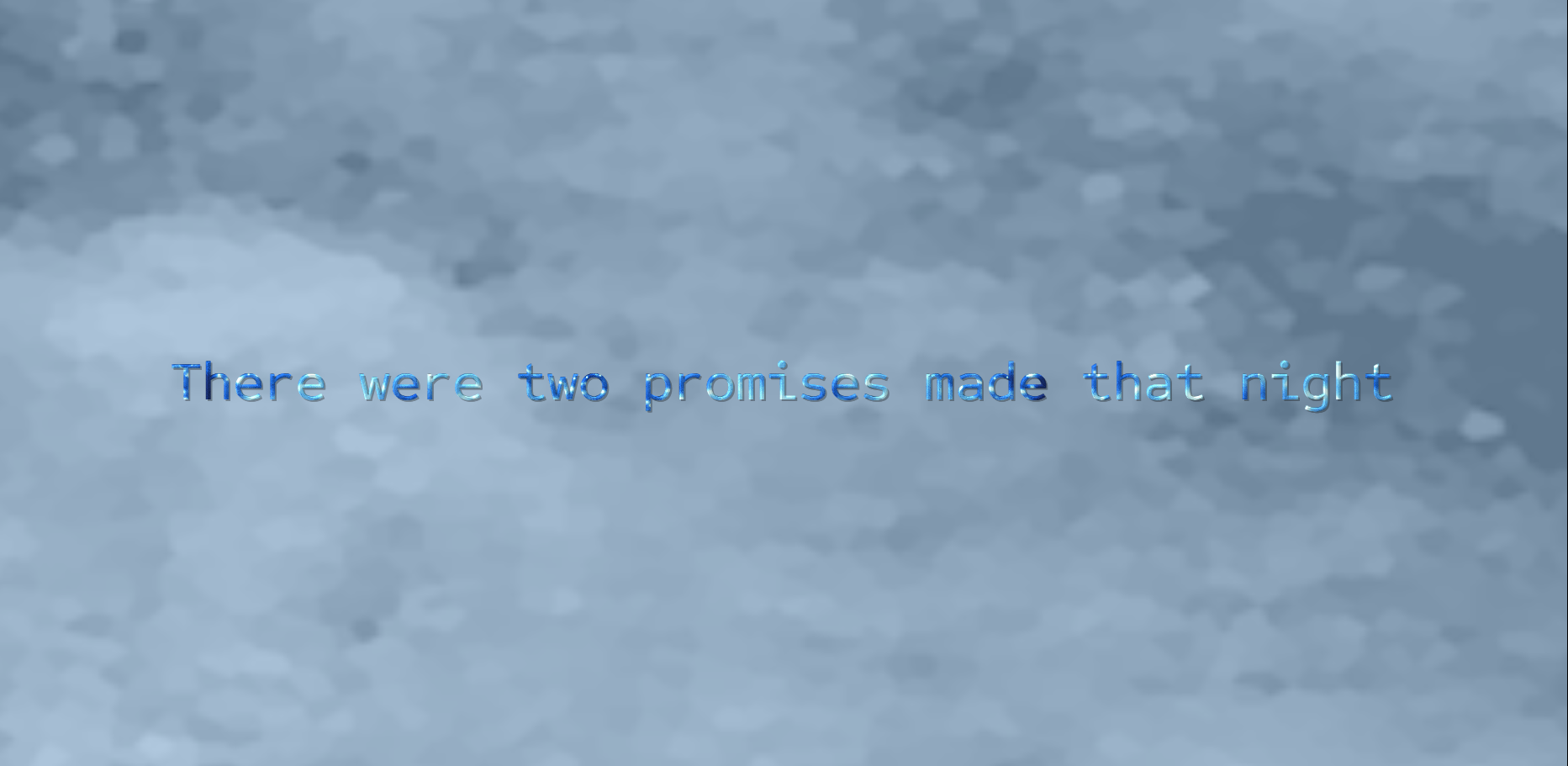
Short interactive fiction game about my thoughts on a friendship that was coming to a natural end. Made purely with JavaScript, CSS, and HTML

Crafting digital
experiences that endure
About
We build thoughtful, purposeful products with a team that cares deeply about design,
From a blank canvas to a living product
Every project begins with listening — understanding the goals, constraints, and the people who'll rely on the outcome. We translate that understanding into clear, buildable plans.
Iteration is built into everything we do. We ship early, learn fast, and refine until the work is ready to stand on its own.
Detail is where trust is built or lost
We believe the small moments — a transition, a loading state, an error message — shape how people feel about a product over time. We get those right.
Quality is a habit, not an event. Our review process is embedded throughout, not bolted on at the end.
We measure success by what happens after launch
Shipping is the beginning, not the end. We stay engaged with the products we build — monitoring, learning, and improving — because we know that what works on day one rarely works unchanged on day one hundred. Long-term thinking is the only kind we practice.